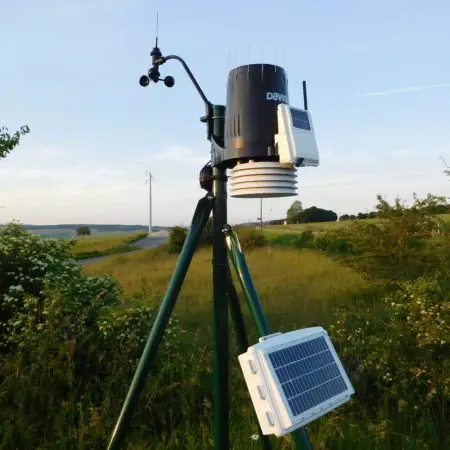
A home weather station helps you observe conditions where its sensors are installed, including temperature, humidity and, depending on the model, wind and rainfall. These local observations complement professional forecasts and official warnings; they do not replace them.
Here’s what you need to know.
Observe Your Local Weather
Local conditions can differ from those reported at a nearby airport or across a wider region. A personal weather station lets you compare your own observations with the forecast and learn more about your location.
A weather station can be very beneficial for many who depend on weather information as part of their every day lives like farmers, outdoorsy types and many weather enthusiasts. There are many who use the device recreationally and/or professionally.
A weather station captures data such as temperature, humidity, barometric pressure and wind speed using sensors. There are also weather stations which can also measure the amount of rainfall or humidity in your area. Other important factors to consider include accuracy, transmission distance, connectivity type and more. Most weather stations have the capability to keep data synced at all times.
Depending on the model, you can view readings on a local console or through an internet-connected app or website. Remote access can help you monitor conditions while away, but it requires the necessary hardware, power, connectivity and service. Normal readings do not establish that your property is safe from an approaching storm.
Long-term records can help you compare seasons and understand how past weather affected your home or garden. They do not, by themselves, provide a reliable forecast of an approaching storm.
Mark The Calendar For Outdoor Plans
A home weather station. can help you observe conditions while planning outdoor activities. Some models calculate dew point, wind chill or heat index from their readings. These describe aspects of current conditions; they are not a forecast of what will happen later.
For example, before a barbecue, check the forecast and any official watches or warnings, then use your home weather station for additional local observations. Do not dismiss a warning because conditions at your sensor appear normal.
Be ready to postpone outdoor plans or move to safe shelter as conditions change. If you hear thunder, go inside a substantial building or an enclosed hard-topped vehicle; do not wait for a station alarm. See the National Weather Service lightning-safety guidance.
Accuracy & Dependability
A properly installed weather station can show conditions at its sensor location that differ from a regional report. Its accuracy depends on the equipment, siting and maintenance. Local measurements and any user-set threshold alarms are not equivalent to official severe-weather warnings and cannot guarantee advance notice of a hazard.
A professional weather station allows you to monitor your weather conditions around your home and backyard or area of business. Its reliable weather monitoring device is built in a self-contained, easy-to-install system. Some may include a sleek but tough outdoor integrated sensor and a comprehensive console which is sold as a whole package.
Depending on which weather station model you choose, the setup can take minutes with wireless models or much longer for wired devices which requires more planning. Once the device is set up properly and clear from all outdoor obstructions, some models can provide data within a large range of your specific area of home or business.
Sensors send readings to a console at model-specific intervals. Some systems also provide remote records or notifications through an internet service. During a power outage, local readings may continue only if the sensor and receiver have suitable backup power. Remote access may also stop if the router, internet connection or cloud service is unavailable. Check your model’s manual for backup functions and runtime; do not assume a sensor battery powers the console or network equipment.
For severe weather, follow official warnings and the protective action appropriate to the hazard. Keep more than one way to receive alerts, such as Wireless Emergency Alerts on a compatible phone and a suitably configured NOAA Weather Radio. A personal station can supplement your awareness, but it should not be your sole emergency-warning source. See NWS severe-weather preparedness guidance.
Great Investment
A weather station is a durable device designed to collect data about the weather conditions in your local area using multiple sensors. The instrument can be analog technology or digital. The data is then processed within the software which analyzes the information into your computer, phone or tablet.
Prior to making a decision on which model to buy, you should consider the kind of information you would like your weather station to collect for your home or business. Depending on your needs, you can purchase a basic or professional weather station. A budget-conscious weather station collects basic data including air pressure, temperature, barometric pressure, and humidity. While a more expensive professional weather station can collect similar data and also wind speed or rain gauge using additional sensors. Depending on the device you choose, the update interval for some devices may be every second, while others may update data every five minutes or so. If you need the most current data collected more frequently, you should consider this factor which varies depending on which weather model you choose.
Once you install your own personal weather station, follow its maintenance instructions and use its observations and available history to learn about local conditions. Continue to consult professional forecasts for what may happen next.
Contributing To A Weather Network
There are 250,000+ weather stations around the world. One very famous network is Weather Underground. The network consists of a world-wide group of weather enthusiasts who enjoy sharing and connecting their data from their weather stations to the online platform. Weather Underground provides a collection of data you need to enhance your ultimate experience on a global community platform and enriching the future of forecasting.
When you become a member of this network of weather stations, you contribute your local information with others. This data is then linked to all the sensors globally which create more data for everyone as a whole. The more information that is collected around the world creates a unison of better forecasts linking all sensors analysis when it truly matters. Weather stations and monitor owners of the network enjoy more precise weather conditions for their exact location along with detailed graphs and additional helpful guides about the weather.
The network also archives your historical data so you can always look back and share your data while helping to improve weather forecasting for everyone. A win-win for everyone in the network. Join together with other global weather aficionados and become a member of a worldwide weather network.
Conclusion
A weather station can be a useful investment for people who want to monitor local conditions and learn from their records. Its benefits depend on the model, installation and maintenance. It does not guarantee safety or replace professional forecasts and official warnings.
Many people choose to own a weather station to follow local conditions and compare their records over time. So the next time someone asks you, “how’s the weather?” you can share a local observation from your station.