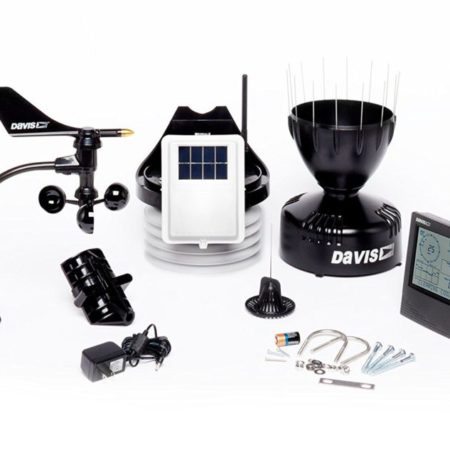
A useful farm weather station measures the conditions that affect your decisions: temperature near frost-sensitive crops, rainfall where you irrigate, wind in an exposed location, or moisture in the root zone. The right choice depends on those jobs and how you will receive the data—not simply the number of sensors in the box.
For a small property with a nearby powered console, consider the Ambient Weather WS-2000. For flexible sensor placement and a more expandable weather-monitoring system, consider the Davis Vantage Pro2 6252. For a field without usable Wi-Fi, investigate the cellular KestrelMet 6000. Each has limitations, particularly for urgent frost protection and irrigation decisions.
These recommendations are based on manufacturer documentation and agricultural guidance, not hands-on testing. A station supplements forecasts, official warnings and field observations; it cannot guarantee protection from damaging weather.
As an Amazon Associate I earn from qualifying purchases. If you buy through links on this page, I may earn a commission at no extra cost to you.
Choose the monitoring job first
| Your main need | Candidate | Important qualification |
|---|---|---|
| Everyday weather and optional soil-moisture monitoring on a small property | Ambient Weather WS-2000 | Console needs power; remote access needs internet. Soil sensors are extra. |
| Separate wind placement, local display and expandable agricultural measurements | Davis Vantage Pro2 6252 | Soil/leaf measurements and solar radiation require additional hardware; cloud export has subscription requirements. |
| Remote field monitoring without farm Wi-Fi | KestrelMet 6000 cellular configuration | Needs suitable cellular coverage and a paid data plan. Normal cellular transmission is every 15 minutes, not an instant frost alarm. |
These are different approaches, not an accuracy ranking. None of the base packages automatically supplies a complete crop-specific irrigation or frost-protection system.
What to consider before buying
Temperature, humidity and frost. Measure where the vulnerable crop is, including cold pockets that a station beside the farmhouse may miss. Frost damage depends on crop and growth stage, not one universal temperature. For frost-protection planning, humidity and wet-bulb conditions may also matter. Follow crop-specific guidance rather than treating a general temperature alarm as an instruction to start sprinklers. Penn State frost guidance and Rutgers’ orchard monitoring guidance explain the distinction.
Rainfall and wind. A rain gauge helps record local rain, but rainfall alone does not establish how much water remains available to roots. Wind readings depend strongly on exposure and mounting height. Our guide to measuring wind speed explains the measurement itself.
Soil and irrigation. Soil moisture, soil temperature and leaf wetness are separate measurements. Choose sensors for the crop, soil and sampling depth. University of Minnesota Extension recommends monitoring representative locations and depths and combining soil readings with other irrigation information. A single percentage reading from a shallow garden probe should not be treated as a field-wide irrigation prescription. Soil-sensor placement and interpretation.
Evapotranspiration. ET estimates water loss through evaporation and plant transpiration. A station displaying solar radiation does not necessarily calculate useful crop water requirements. Check the calculation, required sensors and software, then account for the crop and soil. Extension guidance on ET-based irrigation scheduling.
Connectivity, records and alerts. Sensor-to-console radio is different from Wi-Fi or cellular internet. Check reception at the actual mounting site, local operation during an outage, export access, reporting intervals and recurring charges. Test the complete alert path before relying on it. A fast sensor update does not guarantee an equally fast phone notification.
Serviceability. Include mounts, shielding, batteries, cleaning access and replacement components in the budget. A reachable rain collector and an available replacement sensor can matter more than a longer feature list.
Ambient Weather WS-2000: a practical small-property option
The WS-2000 combines an outdoor array with a powered color console. Its core measurements include rain, wind, temperature, humidity, UV and solar radiation. It earns a place here because the console supports optional additional sensors and local data recording—not because it is an agricultural management system. Manufacturer specifications.
The optional WH31SM measures soil moisture and supports calibration for different soils with the WS-2000. It does not measure soil temperature. It can help follow conditions in a bed or other representative location, provided you interpret and calibrate it appropriately. It is not a substitute for a multi-depth field assessment. WH31SM documentation.
For records, the console supports SD-card export. Ambient specifically notes that additional-channel sensor records require the card to remain inserted; they are not retained in onboard flash. That matters if you want a soil or extra-temperature history rather than only the current reading. Recording and sensor support.
Remote viewing uses an internet connection and Ambient Weather Network. Enhanced services such as AWN+ SMS alerts have separate terms; do not assume every notification feature is included with the station. The combined outdoor array also forces a compromise between wind exposure and temperature/rain placement.
Check the WS-2000 on Amazon (paid link).
If soil-moisture monitoring is part of your plan, check the optional WH31SM sensor on Amazon (paid link). It is an add-on, not a complete station.
Davis Vantage Pro2 6252: flexible siting and expansion
The current 6252 package includes the WeatherLink Console, rather than the older LCD console supplied with the 6152 previously featured here. The standard package measures temperature, humidity, rain and wind. Its anemometer can be mounted separately, using the included cable up to 40 feet from the rest of the sensor suite. That flexibility is useful when the best wind location differs from the best temperature and rain location. Davis 6252 product information.
Expansion is conditional: ET requires the optional solar-radiation sensor. Soil moisture, soil temperature and leaf-wetness monitoring require appropriate additional stations and probes. They are not included simply because the product is called Vantage Pro2. The WeatherLink Console manual explains the supported measurements and differing update intervals.
The console works locally without Wi-Fi. For cloud access, it uploads over Wi-Fi to WeatherLink.com. Davis states that downloading records from WeatherLink.com requires Pro or Pro+; the console’s microSD slot is not a user export facility. Do not apply old USB-logger instructions to this console. Current console and export FAQs.
Choose this route when placement flexibility and a planned expansion path justify the additional cost. It is still one monitoring installation, not automatic coverage of every field or frost pocket.
Check the Davis 6252 with WeatherLink Console on Amazon (paid link). Check the selected seller and package contents before ordering.
KestrelMet 6000: cellular monitoring for a remote field
The cellular KestrelMet 6000 is worth considering when a field has suitable cellular coverage but no usable farm Wi-Fi. It sends weather measurements to Ambient Weather Network and uses solar power with battery backup. The agricultural configuration offers soil-profile, leaf-wetness and solar-irradiance options; verify exactly which extras are included in your selected configuration.
The optional soil array monitors moisture and temperature at three depths. That addresses a different need from a single shallow soil probe. The cellular carrier must suit coverage at the field; it does not need to match your personal phone carrier. Budget for the cellular plan after its introductory period. Wi-Fi and cellular are separate versions, not interchangeable connection modes.
For frost monitoring, understand the delay before buying. The cellular manual specifies normal transmissions every 15 minutes. Low-power modes can reduce reporting further. This is not equivalent to an immediate local alarm, and a cloud alert also depends on connectivity and delivery. Confirm that the complete system meets your response-time needs. KestrelMet cellular manual.
Manufacturer configuration and purchase page.
Historical data can be downloaded through the cloud service. Plan for adequate sunlight, maintenance access and network outages. An exact current Amazon agricultural package was not verified for this guide; use the manufacturer to configure the carrier and sensors correctly.
When a larger agricultural system makes more sense
Multiple fields, different soil zones or high-value crops may justify a designed network of sensors, gateways and data services. Davis’s EnviroMonitor system, for example, uses sensor nodes and a gateway rather than assuming one consumer station represents an entire operation. Obtain a site-specific hardware, connectivity and service proposal before buying individual components.
Already own one of the older stations?
Davis 6152: useful Vantage Pro2 hardware should not be discarded solely because a newer console package exists. Identify your console and logger before choosing an upgrade. Our Vantage Pro2 article covers the older equipment; use Davis’s current documentation for new purchases.
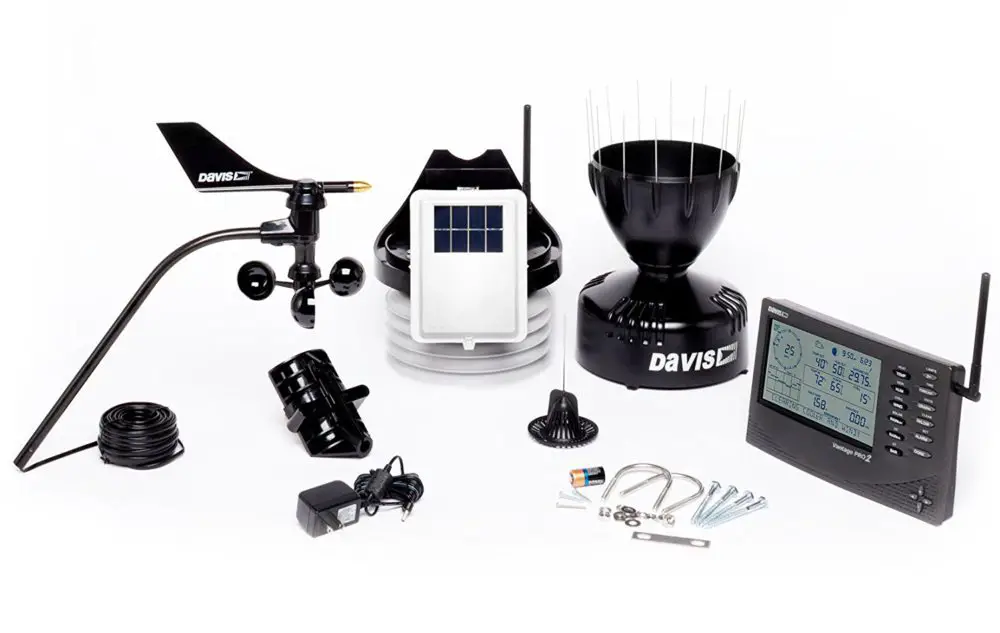
6250-WEATHERBRIDGE: this was a Davis Vantage Vue bundle using an additional bridge for internet connectivity. It should not be presented as Ambient’s current agricultural station. The Vantage Vue measures basic weather conditions but does not supply UV measurements as the previous version of this article claimed. Start with Davis Vantage Vue information and identify your existing console/bridge before changing anything.
Extech WTH600-KIT: Extech lists it as discontinued. Its local console, five weather measurements and high/low alerts can still be useful to an owner. It is no longer a new-purchase recommendation here. Extech’s product and manual resources remain the appropriate support destination.
Installation matters as much as the shopping choice
Choose the measurement location before committing to the hardware. General weather-observing standards and crop-specific monitoring locations serve different purposes: an elevated wind sensor does not describe the temperature beside a frost-sensitive bud.
Keep temperature sensors properly shielded and away from artificial heat, give the rain collector suitable exposure, and avoid preventable wind obstruction. Protect mounts and cables from livestock and machinery while retaining cleaning access. NWS siting guidance provides a reference; practical compromises should be recorded rather than concealed.
Use our Sensor Siting Checklist and installation-location guidance to plan the installation. Buy the system that measures the conditions you need, at the locations you need, with a data path and maintenance burden you can sustain.
If your needs are mainly household monitoring, our general weather-station buying guide provides a broader starting point.